

“hope” written by Audrey Taylor
Once there was a girl named Evelyn who lived in a quiet town called Ashwood. Her house was very small tucked between a lot of trees and bushes. Though Evelyn’s life was simple, she often felt out of place. She was a very shy girl, but she was also very kind. Other children helped their families in the fields, or would spend hours by the river with other kids.
Evelyn always had an old paintbrush with her that she carried around that once belonged to her grandmother. The bristles were frayed and the handle was chipped, but to her it was the most important thing that she owned. Nobody in the town knew that the brush she owned was magical.
Whenever Evelyn painted a door on anything, it would shimmer and solidify. It would crack open into a whole other world. At first, she could not believe it herself. The first door that she painted led her into a glowing land, where fireflies sparkled and the grass would calmly dance when the wind blew. Another time, Evelyn painted on the wall of her own home and stepped into an endless ocean where stars reflected on the waves like the sky had fallen into the sea. But the brush was not all good. It didn’t always show her beauty. Sometimes the doors would open to places that made her feel an unsettling feeling. Once she went into a dark forest and the trees whispered her name in a deep, low voice. Another time she entered into a room where there was just a hall of mirrors, and every reflection made herself unrecognizable and turned her into something cruel. She knew she should be cautious but she was always curious and curiosity pulled her away from that.
For a long time, she kept her secret. She would go explore quietly, slipping away whenever she could, never telling anyone about all the different worlds behind the doors. But soon, something began to change in Ashwood. It started with a thin mist going through the streets at night.
At first, the people in town thought little of it, but soon it grew thicker, darker, and colder. It went through homes and flowed through plants, and frightened animals to silence. The children stopped going to the river with all the other kids and got quiet. The town that used to be so busy, warm, and happy grew into heavy fear. Everything seemed weaker. Even the fires and lanterns.
Evelyn felt helpless. Each night the mist got cooler against her window, as if it was looking for her. Finally, one night when she could not fall asleep, she reached for her brush. Her hand trembled, but the brush felt alive. It felt like the brush was tugging at her to use it and paint. Slowly, she painted another door onto the wall. This time when she painted it, the wood that had formed was not bright or golden like the others. It was dark with cracks and was faintly colored. The air around the door turned cold. It almost felt like it was stinging her skin.
Evelyn knew that this door was different. It did not feel like an escape, it felt like an answer. Evelyn stepped through the door.
The world on the other side of the door was a land with shadows. The ground was soft and ashy, the sky was a dark smokey color. In the center of the land, a tall thin creature stood. It had eyes that were bright, but not in a good way. As if they burned in fire. Its voice echoed as it spoke.
“Your people do not deserve the light. You waste it. You forget it. So I will take it away.”
Evelyn’s fear almost made her go back, but bravery came over her.
“If they do not deserve it,” she said, gripping her brush tighter, “then I will carry it for them.”
The creature’s laugh shook the ground. “And what light can a girl like you carry?”
Evelyn raises her brush. “This one.”
The battle between the two was not fought with weapons. Instead, she painted. With every stroke, doors opened around the creature. One door showed a mother shielding her child with her own body, even when she was weak. Another door showed children laughing and playing, even when life was hard. Each door Evelyn painted bursted out with light and warmth into the dark world.
The creature shrieked and abolished trying to smother the doors, but Evelyn kept painting. Her arms ached, her brush got heavy, but she didn’t stop. Doors after doors kept appearing, each door carrying a piece of love, hope, and kindness she had seen in her own town. The more light that spilled out, the more the shadow shrunk. Finally, with one last cry, the creature dissolved into smoke and vanished.
Evelyn staggered back through the final door and collapsed onto her floor, clutching the brush to her chest. When the dawn came, the mist was gone.
All the plants stood tall and healthy again, animals got louder and healthier, and the people in town slowly rediscovered all their laughter and happiness in town.
They never knew what happened or who saved them. Evelyn kept her secret. She hid her brush away. Not for praise, but for the day when the world might need a door to hope again.
DIRECTOR’S NOTE (A.K.A. MOM NOTE) for “Hope” by Audrey, age 14
There are moments as a parent when you realize your child has been paying attention in ways you didn’t fully grasp. This story is one of those moments. Reading “Hope” felt like looking through a doorway she painted, not into a fantasy realm, but into her inner world, and into the ways she has absorbed, filtered, and transformed everything life has shown her so far. And because I know her, because I’ve raised her, watched her grow, and watched her navigate hardship, I think that I can see where this story comes from.
Evelyn, with her quiet kindness and shy bravery, is unmistakably my daughter. There is nothing performative about the character. She isn’t loud, she isn’t chosen by prophecy, she isn’t arrogant about her magic. She is gentle, humble, and quietly curious… exactly like the girl who wrote her.
My daughter has always been that way. Soft-hearted, intuitive, quietly observing everything. Never asking for attention, never flaunting her gifts, but holding a depth and responsibility that most adults (including her own mother) have struggled to cultivate.
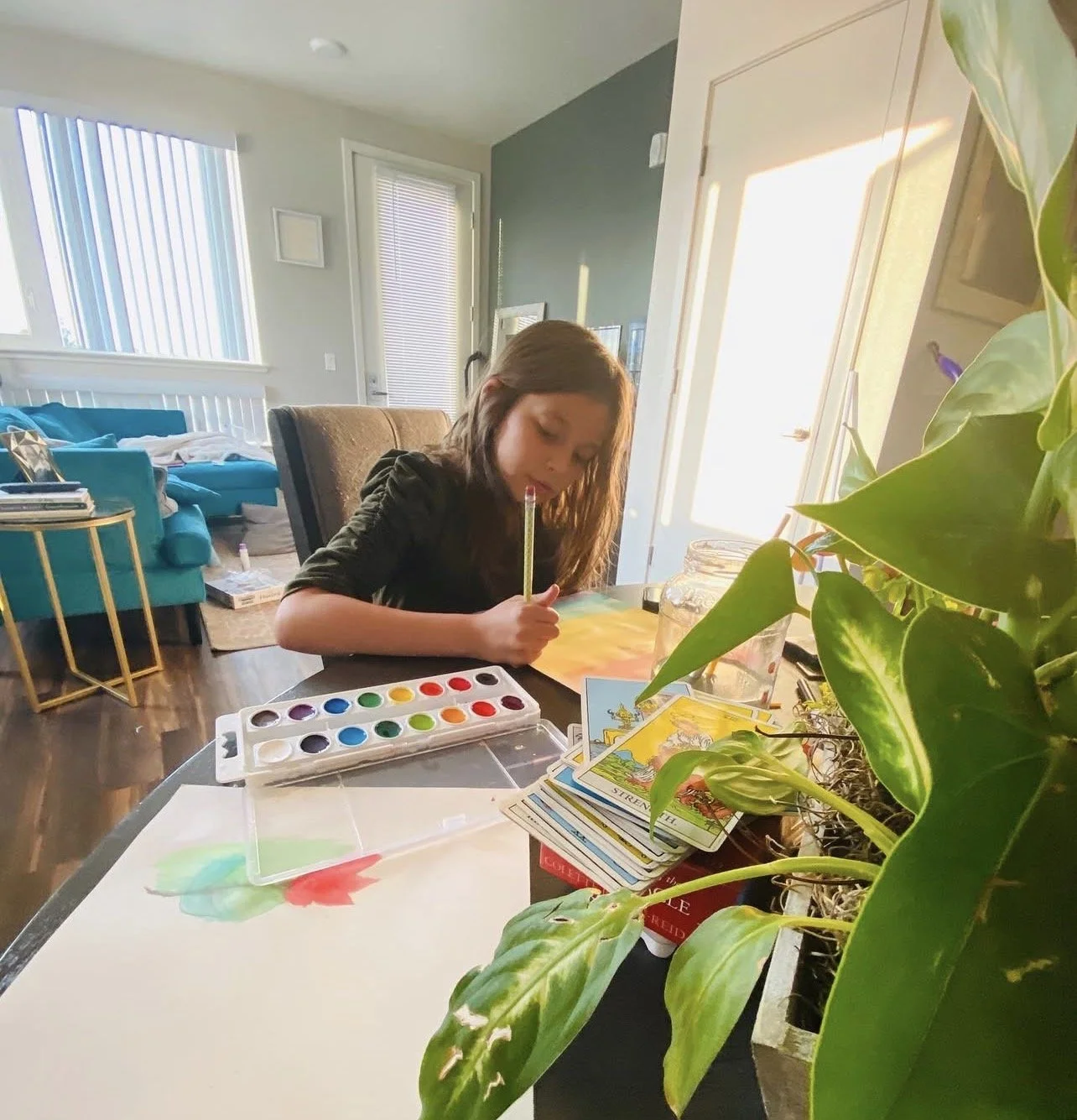
Her choosing a paintbrush as the magical object isn’t random either. It’s a relic from her own childhood. Yes, we read “The Magic Paintbrush” together. She was also obsessed with painting as a toddler. She made entire worlds out of glitter smears and watercolor puddles.
Back then, she already believed art could open portals. She used to wave her paintbrush like a wand and tell me it was “magic. Apparently, she wasn’t kidding.
Here’s where her psychology shows itself in ways she probably doesn’t consciously realize. The mist in the story moves silently throughout the entire town. It dims the light. It makes everything weaker, colder, muted. It frightens animals and silences children and it creeps up to Evelyn’s window.
This isn’t random imagery. I think this is what depression looks like to a child. And because I know that she has watched her mother move through seasons of heaviness, quiet, fog-like, unspoken and debilitating, I think that’s what it is. Kids don’t have language for mental health, but they have metaphor. She rendered depression as weather: creeping, cold, and dimming the life around it.
And like Evelyn, Audrey always responded with quiet protectiveness. Not fear, not withdrawal, but an intuitive desire to carry light when others couldn’t.
She has always carried more than her age should require. Not in a tragic way, but in the way of someone born with emotional intelligence older than her body. She has always been the kid who checks the room, reads the energy, adjusts herself. She paints doors to distraction, joy, hope, little acts of magic she makes for the people she loves.
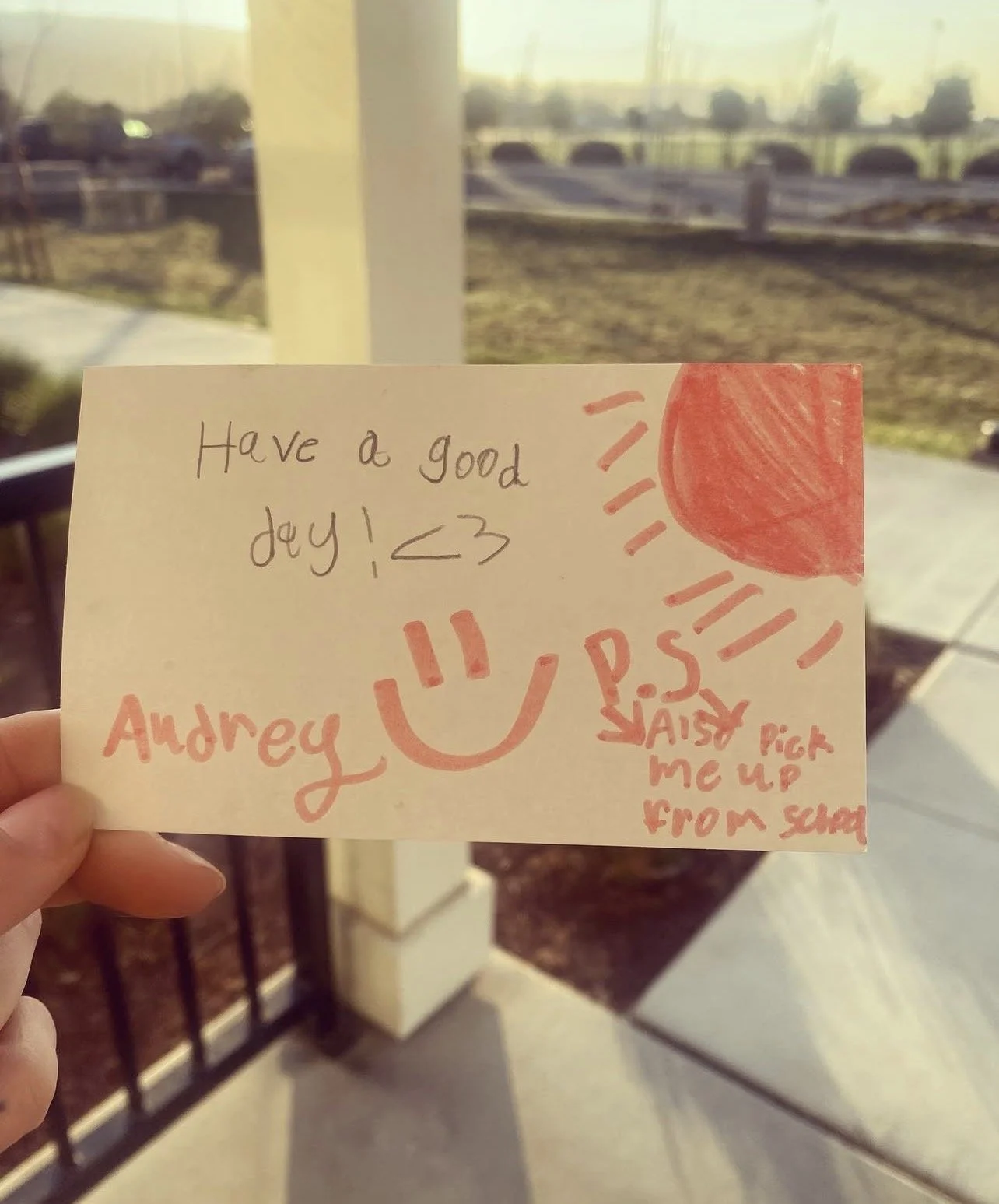
She is the kind of kid who will the clean the house as a loving act of service, the kind of kid who notices someone wilting and leaves sweet notes to bring joy, the big sister and older cousin who the kids adore and run to when they need help.
In mythology the descent into the underworld, the confrontation with a shadow figure, the reclaiming of light. These are ancient story structures. People study them in graduate programs. My kid did this on instinct.
Her “shadow creature” isn’t just a villain; it’s depression, nihilism, despair, the belief that humans no longer deserve light. And the thing that defeats it? Not violence. Not ego. Not power. Memory. Compassion. Witnessed goodness.
Her doors don’t show weapons. They show moments of humanity’s quiet beauty, a mother shielding her child even when she’s weak, kids at the river, laughing through hardship, people loving, trying, holding on…
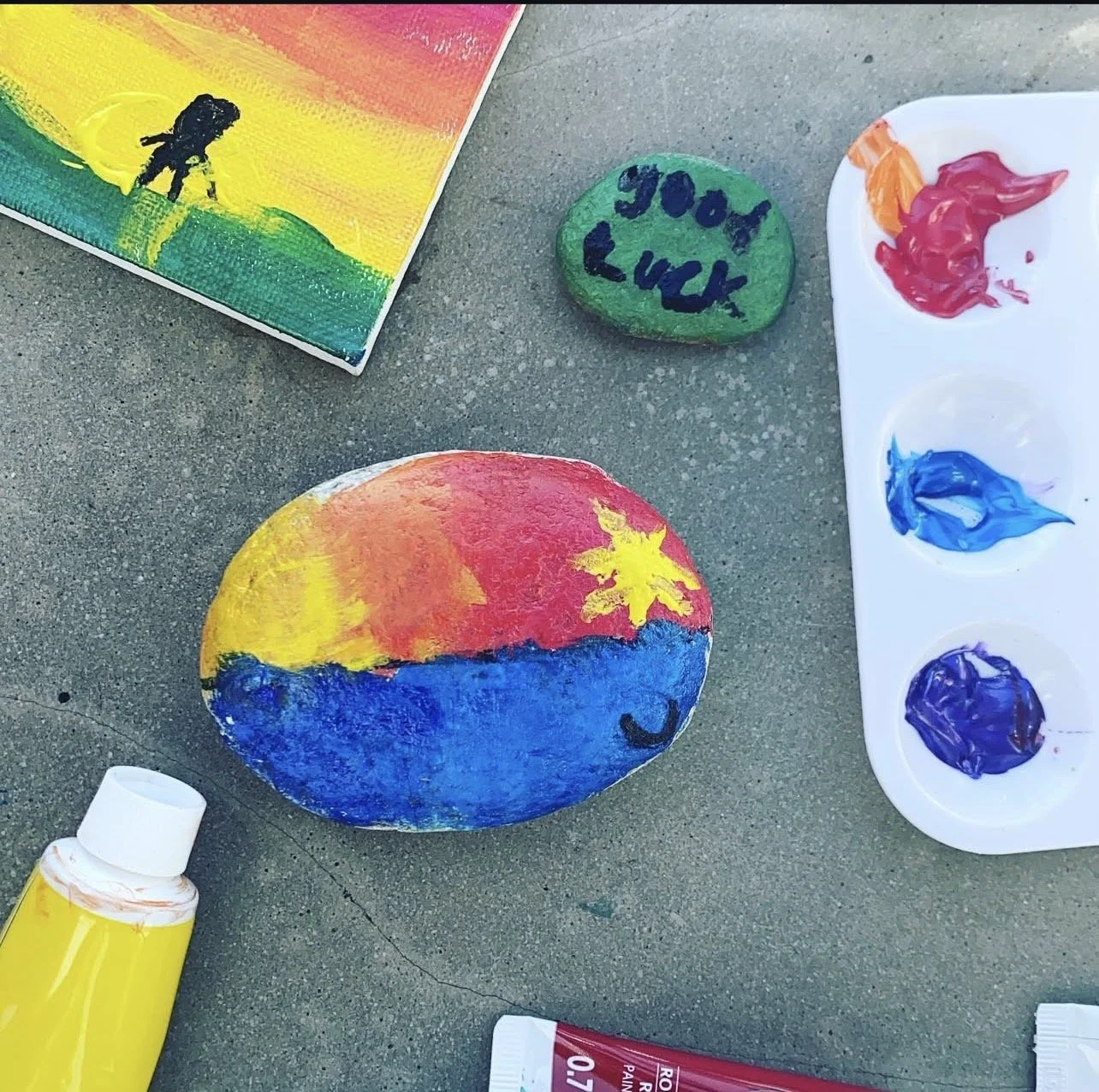
She weaponizes empathy. She battles darkness with documented proof of why light is worth fighting for. That is a worldview. A powerful one. An old soul one.
From a craft perspective, what she did is wild for a 14 year old:
Symbolic magical system: The brush doesn’t grant wishes; it reveals truth.
Parallel structure: Light worlds vs. unsettling worlds.
Internal logic: Every door reflects some emotional state or human truth.
Controlled tone: It never slips into cliche or childishness.
Thematic clarity: Hope is a responsibility, not a mood.
Restraint in the ending: She chooses secrecy, humility. Very adult storytelling.
No 14 year old writes with this much symbolic cohesion unless they’ve lived with their eyes wide open, absorbing symbolism from life itself.
She created a story where a gentle girl who feels out of place carries light for an entire community, even though no one knows, even though no one sees, even though she is scared.
She saves them quietly. She hides the brush afterward. Not for praise. Not for recognition. But because she knows the world may need her magic again someday.
That’s Audrey. That’s who she is. That’s how she has loved her family members and friends, even when she didn’t know she was doing it.
She wrote herself as the lightkeeper. She wrote the world as Ashwood, the town that forgets its brightness sometimes. She wrote the brush as an imaginative gift she inherited. And she wrote hope as something you carry, not something you wait for.
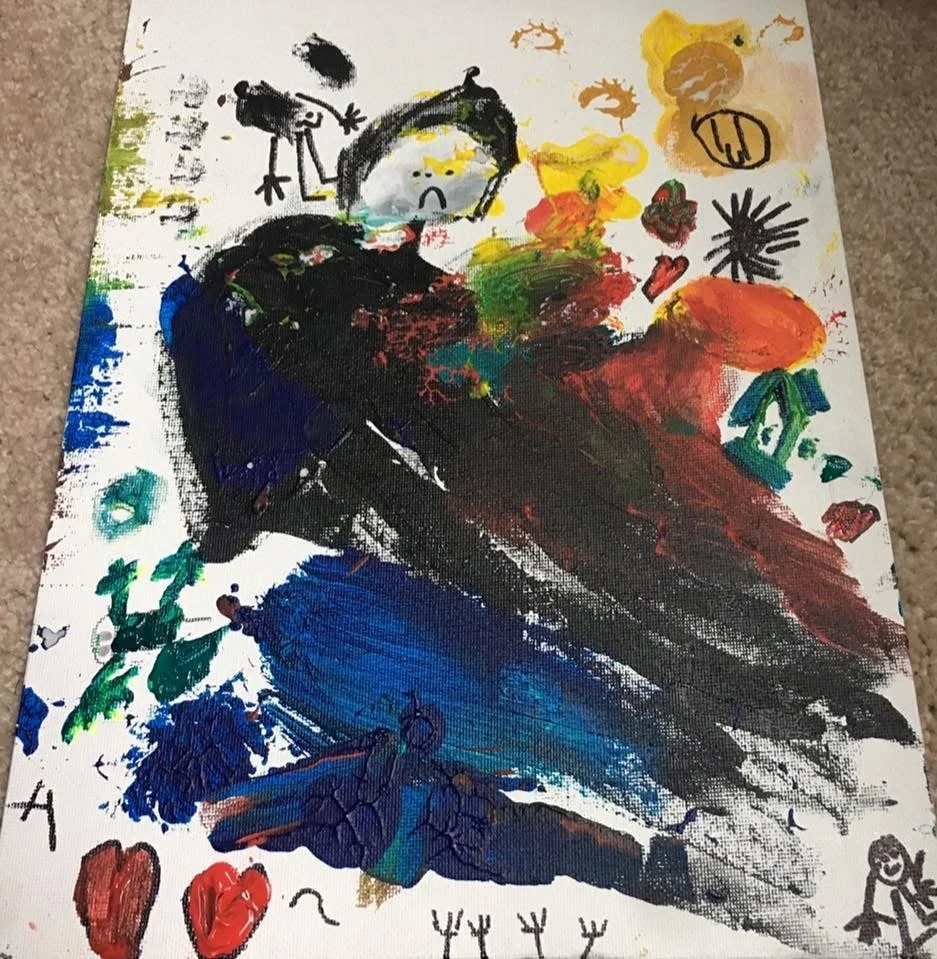
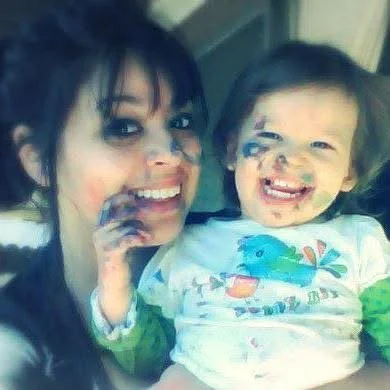
I raised a girl who notices everything, loves quietly but fiercely, protects without being asked, creates portals out of imagination, and wields empathy like a supernatural weapon.
If this is her at 14, writing from instinct… the she’s not just “creative.” She’s not just “talented.” She is tapped in. And she has no idea yet how powerful that is.